
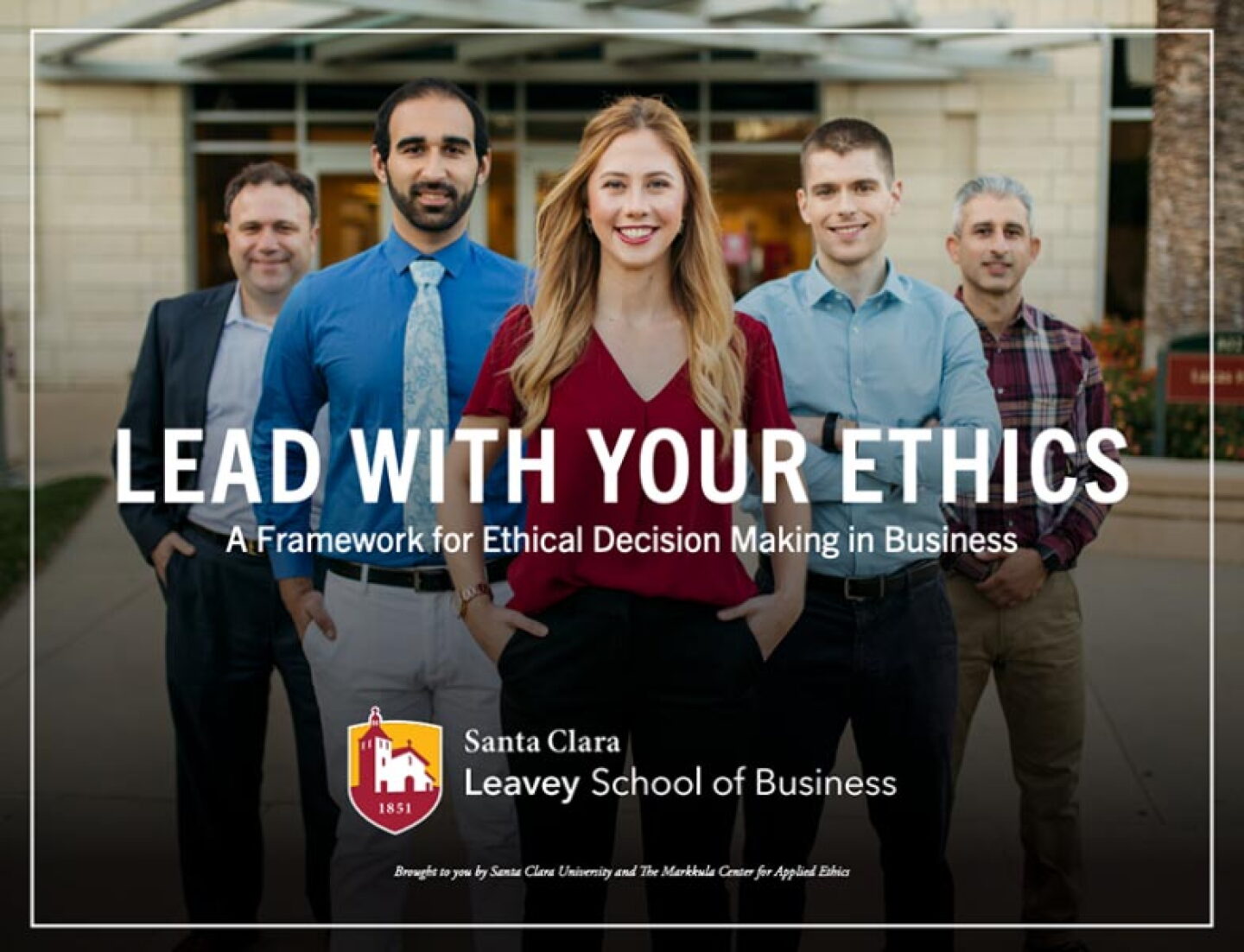
Guides and Toolkits
Lead With Your Ethics: A Framework for Ethical Decision Making
Career Resources & Media from SCU Leavey
Grow your business leadership skills with free resources from Santa Clara University’s Leavey School of Business.
GUIDES & TOOLKITS
Lead With Your Ethics: A Framework for Ethical Decision Making
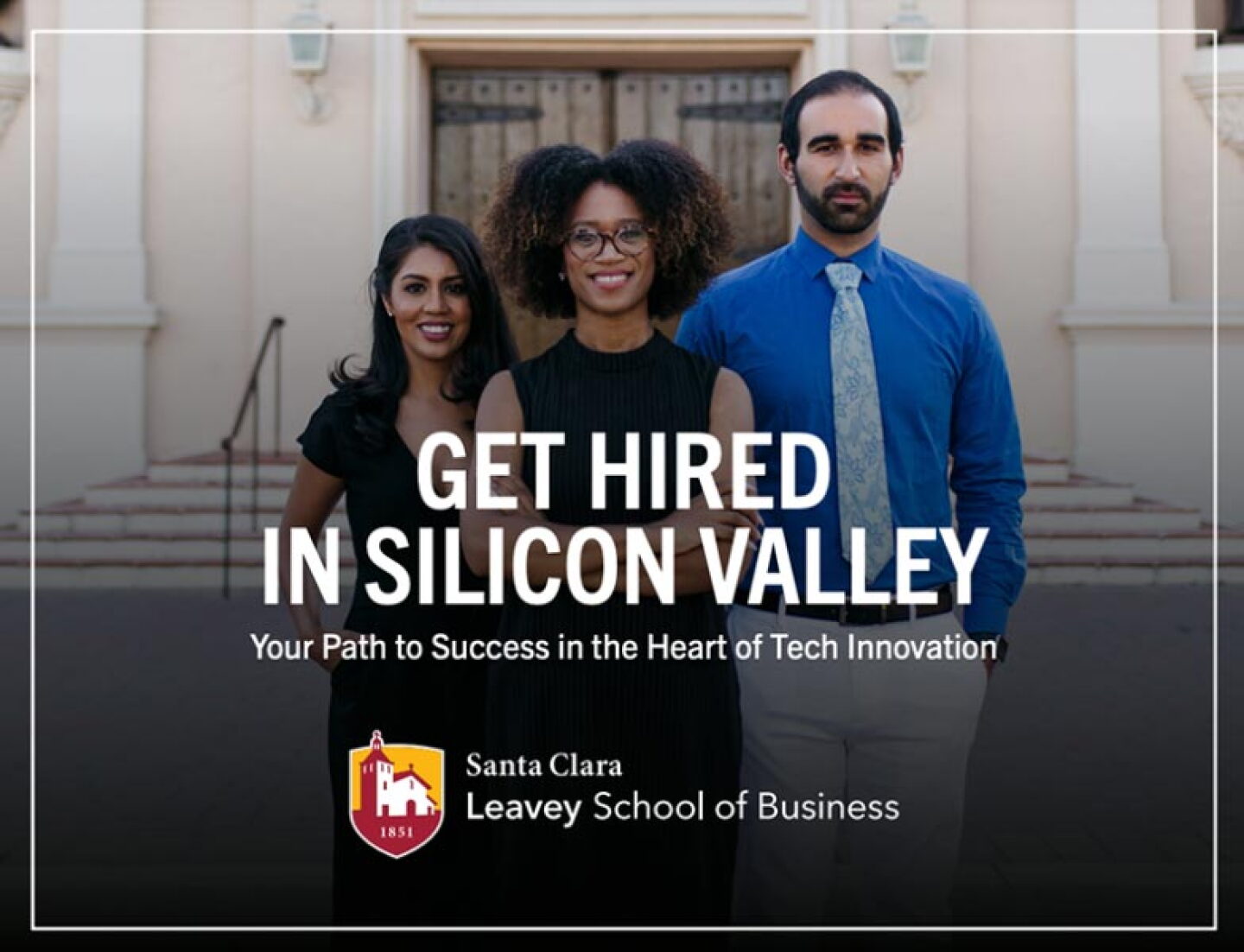
Get Hired in Silicon Valley: Your Path to Success in the Heart of Tech Innovation
WEBINARS & VIDEOS
Silicon Valley Bank Collapse Explained
0:00 / 0:00
Video Companion
Video Transcript
March ’23 Silicon Valley Bank Collapse Explained
Seoyoung Kim:
Hi everyone, I'm Seoyoung Kim. I'm currently the Finance Department chair and Program Director for the MS in Finance and Analytics. I think a couple of the questions that you all wanted answered were, “How might entrepreneurs learn about this? How is it affecting the day-to-day work of startups and how can they ease their anxieties around the collapse?” I think the first thing is most of us are very aware that banks don't have all the money on hand if everybody went to grab their deposits. And that's where the FDIC insurance is critical. But problems with banks like Silicon Valley Bank is that the vast majority of deposits are not FDIC-insured because the FDIC only insures up to $250,000. Now, saying only 250K, that's normal for retail investors or a retail individual might have money at SVB, they might have money at Chase, they might have money at Bank of America.
So now, if you have far more than $250,000, which is going to be normal for the larger startups here who are making payroll and who are paying for upcoming bills with that money, then that is not going to be FDIC-insured. Things that are FDIC-insured, the FDIC has said that if there is a run on the bank, you'll get your money within two days. Now, the problem with the deposits that aren't FDIC-insured, typically a bank like Silicon Valley Bank is invested in safe assets. So now, when a bank takes your deposit, they're going to do a lot of things with it. They're going to make student loans, they're gonna lend money to people so they can buy cars, get a house, et cetera. Now, with Silicon Valley Bank, they took a lot of those uninsured deposits and invested in US treasuries and invested in agency residential mortgage-backed securities.
So agency residential mortgage-backed securities are backed by Fannie and Freddie. So these are conforming mortgages that will ultimately be made whole if there's a default but all of that takes time. And now with US treasuries, we know that the US hasn't yet defaulted on anything. There's this hoopla about the debt ceiling every once in a while. Especially this time around, it was an even bigger deal that made the US CDS spreads go up. But for the most part, we're not really worried about US treasuries. But the problem, if you're buying these long-term US treasuries, you will get your coupons and you will be made whole over time. But in the interim, there's something called interest rate risk. So when Silicon Valley Bank bought these long-term US treasuries back when interest rates were super low, and then we saw over the last year, the Fed continually went on to raise interest rates.
So what you learn in Finance 101, and what we call Finance 3000 here at Santa Clara, is there's a substantial amount of interest rate risk, or what we call price risk, in these "riskless securities.” So in these default-free riskless securities, there's still a lot of price risk in that when interest rates go up, the prices of those securities come down. So now, when people are coming to collect their deposits, Silicon Valley Bank needs to sell those treasuries, and if they keep having to sell those treasuries at a lower price, now they're in trouble because they don't have the leeway to wait until they can get money whole on those US treasuries. So as this was all happening, then people became worried: “Oh no, will we be able to get our money out to make payroll?” Even if people guarantee that they'll give you your money, you don't know when and how long for the things that aren't FDIC-insured.
So even with all the activity that the US government has made over the weekend to tell depositors that they'll be made whole on their deposits, depositors are still uncertain as to how much they'll have immediately available. The depositors who weren't FDIC-insured, they're concerned as to how much will be immediately available and how long it'll take for them to be able to get all that money over time.
“What can the entrepreneur learn from the collapse? How is the collapse affecting the day-to-day work?” So the day-to-day work is impacted. Even as of last week, where, if there's a hold up on getting your money to make payroll, then entrepreneurs and co-founders need to start thinking about how are they going to pay employees immediately in the near term? And employees, who don't have the same kind of equity stake that an entrepreneur has, won't have the motivation to stick around and do the work.
And rightfully so. And so, entrepreneurs would also need to think about what is their own liquidity backstop? So even though the government has said that they will guarantee all of the deposits, entrepreneurs still have to worry about immediate-term liquidity. And some of the questions here are, “How much should you rely on a local bank like Silicon Valley?” Silicon Valley Bank was FDIC-insured, but they're not what we call a SIFI, or what we didn't call a SIFI then. Now the the federal government is becoming concerned. A SIFI is a Systemically Important Financial Institution. So something that a lot of people aren't aware of is years ago, and this is seven, eight years ago, where Chase, Bank of America, these very, very large banks. Now, they are far larger in terms of the kind of deposits that they have. Where Silicon Valley Bank was in the billions, these banks like Chase and Bank of America are in the trillions for their deposits.
These guys were requiring insurance to be paid by institutions that were going to have larger accounts that exceed the $250,000 maximum that FDI insurance provides for. And so the banks were already thinking about this problem, these larger banks, whereas smaller local banks like Silicon Valley Bank weren't requiring that type of additional insurance from their depositors when those depositors went above and beyond the 250,000 maximum that FDIC was insuring. And now, to give a sense of how much of this is an issue with Silicon Valley Bank, more than 80% of the deposits at Silicon Valley Bank are uninsured. So you can imagine that these guys are very nervous. They're less nervous now that over the weekend, the federal government has decided that all depositors are going to be made whole. Now, that's different from the investor. The investors are probably gonna walk away with nothing here. And by investors, I mean the equity participants in Silicon Valley Bank and some of the other banks that you're seeing going down just within a matter of days of each other. So I suppose the biggest thing would be: Don't put all your eggs in one basket. Try to ask your bank what would happen in the case of a liquidity crunch and have a liquidity backstop of your own.
Seoyoung Kim:
Hi everyone, I'm Seoyoung Kim. I'm currently the Finance Department chair and Program Director for the MS in Finance and Analytics. I think a couple of the questions that you all wanted answered were, “How might entrepreneurs learn about this? How is it affecting the day-to-day work of startups and how can they ease their anxieties around the collapse?” I think the first thing is most of us are very aware that banks don't have all the money on hand if everybody went to grab their deposits. And that's where the FDIC insurance is critical. But problems with banks like Silicon Valley Bank is that the vast majority of deposits are not FDIC-insured because the FDIC only insures up to $250,000. Now, saying only 250K, that's normal for retail investors or a retail individual might have money at SVB, they might have money at Chase, they might have money at Bank of America.
So now, if you have far more than $250,000, which is going to be normal for the larger startups here who are making payroll and who are paying for upcoming bills with that money, then that is not going to be FDIC-insured. Things that are FDIC-insured, the FDIC has said that if there is a run on the bank, you'll get your money within two days. Now, the problem with the deposits that aren't FDIC-insured, typically a bank like Silicon Valley Bank is invested in safe assets. So now, when a bank takes your deposit, they're going to do a lot of things with it. They're going to make student loans, they're gonna lend money to people so they can buy cars, get a house, et cetera. Now, with Silicon Valley Bank, they took a lot of those uninsured deposits and invested in US treasuries and invested in agency residential mortgage-backed securities.
So agency residential mortgage-backed securities are backed by Fannie and Freddie. So these are conforming mortgages that will ultimately be made whole if there's a default but all of that takes time. And now with US treasuries, we know that the US hasn't yet defaulted on anything. There's this hoopla about the debt ceiling every once in a while. Especially this time around, it was an even bigger deal that made the US CDS spreads go up. But for the most part, we're not really worried about US treasuries. But the problem, if you're buying these long-term US treasuries, you will get your coupons and you will be made whole over time. But in the interim, there's something called interest rate risk. So when Silicon Valley Bank bought these long-term US treasuries back when interest rates were super low, and then we saw over the last year, the Fed continually went on to raise interest rates.
So what you learn in Finance 101, and what we call Finance 3000 here at Santa Clara, is there's a substantial amount of interest rate risk, or what we call price risk, in these "riskless securities.” So in these default-free riskless securities, there's still a lot of price risk in that when interest rates go up, the prices of those securities come down. So now, when people are coming to collect their deposits, Silicon Valley Bank needs to sell those treasuries, and if they keep having to sell those treasuries at a lower price, now they're in trouble because they don't have the leeway to wait until they can get money whole on those US treasuries. So as this was all happening, then people became worried: “Oh no, will we be able to get our money out to make payroll?” Even if people guarantee that they'll give you your money, you don't know when and how long for the things that aren't FDIC-insured.
So even with all the activity that the US government has made over the weekend to tell depositors that they'll be made whole on their deposits, depositors are still uncertain as to how much they'll have immediately available. The depositors who weren't FDIC-insured, they're concerned as to how much will be immediately available and how long it'll take for them to be able to get all that money over time.
“What can the entrepreneur learn from the collapse? How is the collapse affecting the day-to-day work?” So the day-to-day work is impacted. Even as of last week, where, if there's a hold up on getting your money to make payroll, then entrepreneurs and co-founders need to start thinking about how are they going to pay employees immediately in the near term? And employees, who don't have the same kind of equity stake that an entrepreneur has, won't have the motivation to stick around and do the work.
And rightfully so. And so, entrepreneurs would also need to think about what is their own liquidity backstop? So even though the government has said that they will guarantee all of the deposits, entrepreneurs still have to worry about immediate-term liquidity. And some of the questions here are, “How much should you rely on a local bank like Silicon Valley?” Silicon Valley Bank was FDIC-insured, but they're not what we call a SIFI, or what we didn't call a SIFI then. Now the the federal government is becoming concerned. A SIFI is a Systemically Important Financial Institution. So something that a lot of people aren't aware of is years ago, and this is seven, eight years ago, where Chase, Bank of America, these very, very large banks. Now, they are far larger in terms of the kind of deposits that they have. Where Silicon Valley Bank was in the billions, these banks like Chase and Bank of America are in the trillions for their deposits.
These guys were requiring insurance to be paid by institutions that were going to have larger accounts that exceed the $250,000 maximum that FDI insurance provides for. And so the banks were already thinking about this problem, these larger banks, whereas smaller local banks like Silicon Valley Bank weren't requiring that type of additional insurance from their depositors when those depositors went above and beyond the 250,000 maximum that FDIC was insuring. And now, to give a sense of how much of this is an issue with Silicon Valley Bank, more than 80% of the deposits at Silicon Valley Bank are uninsured. So you can imagine that these guys are very nervous. They're less nervous now that over the weekend, the federal government has decided that all depositors are going to be made whole. Now, that's different from the investor. The investors are probably gonna walk away with nothing here. And by investors, I mean the equity participants in Silicon Valley Bank and some of the other banks that you're seeing going down just within a matter of days of each other. So I suppose the biggest thing would be: Don't put all your eggs in one basket. Try to ask your bank what would happen in the case of a liquidity crunch and have a liquidity backstop of your own.
Silicon Valley Job Market Trends 2023
0:00 / 0:00
Video Companion
Video Transcript
[music]
Seoyoung Kim:
Hi everyone, I'm Seoyoung Kim, Finance Department Chair and MSFA Program Director at Santa Clara University. And I have here with me, Fiona.
Fiona Geisinger:
Hi. I'm Fiona Geisinger. I'm Co-Founder and President of Owl Search Partners. We're a retained search firm for finance, accounting and people, roles. I am also a Santa Clara University MBA alumni, class of 2012.
Seoyoung Kim:
Right now, it is a particularly tough job market. I mean, we are in a tech winter. So what are you hearing and seeing right now in terms of the hiring trends and also the layoffs?
Fiona Geisinger:
This is such an interesting market. And it's such a great time to be having this discussion, because it's not the crash we saw back in year 2008. This isn't the same crutch, this isn't everything's going to zero. There are a lot of jobs out there that are being hired for. There are a lot of people that are getting laid off, and there's more jobs that are opening up. And what we're seeing is the industries that are making an impact in a way are the ones that are getting funding, and that are hiring, that are ramping up. So we're seeing a lot in the MedTech space, we're seeing a lot in the sustainability environmental space, we're seeing a lot in the SaaS space in companies that are helping other companies be more efficient with cost savings and different areas like that. We're not seen as much in the hyper-growth scaling IPO space. So when you're looking in a finance role and you wanna be that person who's taking a company public, over and over again, you wanna be that serial leader, that's not out there right now, because people are in survival mode. It's almost... We talk about this hibernation load that we see. Lots of layoffs, holding the steady staff. That steady staff is the skills that they're looking for, someone who can wear a lot of hats and carry the torch until we get out of this winter, as you had mentioned.
Seoyoung Kim:
When you're dwindling down to the few, then everybody has to do everything as opposed to having one specialized role. In terms of the most competitive skills that employers are looking for right now, 'cause you're talking about what to beef up, of course, the FP&A skills. What else would you recommend that our MSFA students, or even MBA students, should focus on in terms of being most competitive for employers when they complete their program?
Fiona Geisinger:
I think it's less about the area you're going into and more about what you can bring to the table. So both MBA and the MS Finance degree, make sure that the skills you're bringing are very diversified, especially in this market. We're in a market right now where there's a lot of people looking for work. And companies are a little uneasy about things that are happening in the market. So they're not gonna hire multiple people for the same role, and sometimes, especially in the startup environment, which is what we see a lot in the Bay area, they want someone who can wear a lot of hats. So when you're going through your programming and you're starting to program all the classes you're taking, diversify what you're taking and be able to speak to multiple levels of the different areas. So to finance situation, if you understand throughput FP&A and your basic financial statements, but you also a little bit more on the analytical side and understand how to maybe do more of a sales finance or investment finance and understand your ROIs and net present values, you're bringing more to the table. And I think from what we're seeing in the market, that is what is getting the offers, is the people who show that they're beyond the box of the job description.
Seoyoung Kim:
What can you say about specifically our online MSFA program and our online MBA program? What specifically do we do at SCU that you've noticed to connect students who are online to our Silicon Valley career networks?
Fiona Geisinger:
The online MBA and masters programs in general, there's two different types of them. There's the programs that you go into just to get that degree. Santa Clara is not doing it that way. They're making sure there's networking going on, there's on-site, you have to come to campus a couple of times to meet the students, there's still collaboration work. There's still those same case studies of showing different areas of Silicon Valley work, bringing people in-house to do lunch and learns and happy hour chats, there's still that connection to the Silicon Valley world, and to CFOs and CEOs and founders and leaders. That sets it apart from other master's programs because they're essentially taking the in-person program and translating a portion of it online, but still having it as challenging as if you're sitting next to the person. And then you add these case studies and these group projects and you still have to learn the management skills of working together, and you still have to learn how to deal with different personalities, and all the skills that you should be getting from a master's program.
Seoyoung Kim:
I like that because we are very vast and connected in Silicon Valley, and it's hard to feel if you haven't been plugged in here yet, but as soon as you come to Santa Clara, we really are immediately plugged in to this area by dint of our vast networks. Thanks so much again, Fiona, for taking the time to chat with me. So to all of our students, current and perspective, this is Fiona Geisinger. She's one of many amazing people that you'll have contact with once you're here at Santa Clara, and I'm Seoyoung Kim, Finance Department Chair and MSFA Program Director.
Seoyoung Kim:
Hi everyone, I'm Seoyoung Kim, Finance Department Chair and MSFA Program Director at Santa Clara University. And I have here with me, Fiona.
Fiona Geisinger:
Hi. I'm Fiona Geisinger. I'm Co-Founder and President of Owl Search Partners. We're a retained search firm for finance, accounting and people, roles. I am also a Santa Clara University MBA alumni, class of 2012.
Seoyoung Kim:
Right now, it is a particularly tough job market. I mean, we are in a tech winter. So what are you hearing and seeing right now in terms of the hiring trends and also the layoffs?
Fiona Geisinger:
This is such an interesting market. And it's such a great time to be having this discussion, because it's not the crash we saw back in year 2008. This isn't the same crutch, this isn't everything's going to zero. There are a lot of jobs out there that are being hired for. There are a lot of people that are getting laid off, and there's more jobs that are opening up. And what we're seeing is the industries that are making an impact in a way are the ones that are getting funding, and that are hiring, that are ramping up. So we're seeing a lot in the MedTech space, we're seeing a lot in the sustainability environmental space, we're seeing a lot in the SaaS space in companies that are helping other companies be more efficient with cost savings and different areas like that. We're not seen as much in the hyper-growth scaling IPO space. So when you're looking in a finance role and you wanna be that person who's taking a company public, over and over again, you wanna be that serial leader, that's not out there right now, because people are in survival mode. It's almost... We talk about this hibernation load that we see. Lots of layoffs, holding the steady staff. That steady staff is the skills that they're looking for, someone who can wear a lot of hats and carry the torch until we get out of this winter, as you had mentioned.
Seoyoung Kim:
When you're dwindling down to the few, then everybody has to do everything as opposed to having one specialized role. In terms of the most competitive skills that employers are looking for right now, 'cause you're talking about what to beef up, of course, the FP&A skills. What else would you recommend that our MSFA students, or even MBA students, should focus on in terms of being most competitive for employers when they complete their program?
Fiona Geisinger:
I think it's less about the area you're going into and more about what you can bring to the table. So both MBA and the MS Finance degree, make sure that the skills you're bringing are very diversified, especially in this market. We're in a market right now where there's a lot of people looking for work. And companies are a little uneasy about things that are happening in the market. So they're not gonna hire multiple people for the same role, and sometimes, especially in the startup environment, which is what we see a lot in the Bay area, they want someone who can wear a lot of hats. So when you're going through your programming and you're starting to program all the classes you're taking, diversify what you're taking and be able to speak to multiple levels of the different areas. So to finance situation, if you understand throughput FP&A and your basic financial statements, but you also a little bit more on the analytical side and understand how to maybe do more of a sales finance or investment finance and understand your ROIs and net present values, you're bringing more to the table. And I think from what we're seeing in the market, that is what is getting the offers, is the people who show that they're beyond the box of the job description.
Seoyoung Kim:
What can you say about specifically our online MSFA program and our online MBA program? What specifically do we do at SCU that you've noticed to connect students who are online to our Silicon Valley career networks?
Fiona Geisinger:
The online MBA and masters programs in general, there's two different types of them. There's the programs that you go into just to get that degree. Santa Clara is not doing it that way. They're making sure there's networking going on, there's on-site, you have to come to campus a couple of times to meet the students, there's still collaboration work. There's still those same case studies of showing different areas of Silicon Valley work, bringing people in-house to do lunch and learns and happy hour chats, there's still that connection to the Silicon Valley world, and to CFOs and CEOs and founders and leaders. That sets it apart from other master's programs because they're essentially taking the in-person program and translating a portion of it online, but still having it as challenging as if you're sitting next to the person. And then you add these case studies and these group projects and you still have to learn the management skills of working together, and you still have to learn how to deal with different personalities, and all the skills that you should be getting from a master's program.
Seoyoung Kim:
I like that because we are very vast and connected in Silicon Valley, and it's hard to feel if you haven't been plugged in here yet, but as soon as you come to Santa Clara, we really are immediately plugged in to this area by dint of our vast networks. Thanks so much again, Fiona, for taking the time to chat with me. So to all of our students, current and perspective, this is Fiona Geisinger. She's one of many amazing people that you'll have contact with once you're here at Santa Clara, and I'm Seoyoung Kim, Finance Department Chair and MSFA Program Director.
How to Address a Layoff in an Interview
0:00 / 0:00
Video Companion
Video Transcript
Fiona Geisinger:
Hi, I'm Fiona Geisinger. I'm Co-Founder and President of Owl Search Partners. We're a retained search firm for finance, accounting, and people roles. I am also a Santa Clara University MBA alumni, class of 2012.
Seoyoung Kim:
When you're laid off, what is the best way to frame this layoff? Or what is the most successful narrative that you can frame around this layoff?
Fiona Geisinger:
With this job market right now, it's almost expected that you're getting laid off. And I think the best way to frame it, is to speak about positives that you learned from your company, the impact that you made, and if it was a team, like a whole team that got laid off, it's good to talk about that, so that it shows you're not singled out as a layoff to get rid of you, as opposed to, "This function is going away... ", or, "Part of my team got laid off."
I work with founders daily. First time founders, especially, that just don't have as much of a grasp around when people get laid off, it's not about their skills. So to frame it around, "Our company, unfortunately, lost funding", or, "We had to go into hibernation mode", or whatever the words were on why that reduction in force happened, it helps set the stage to why. But coming at it with a positive light, which is, "While I was there for these six months, we built out this function", or, "I was able to build out this, and unfortunately, I didn't get to see it come to a fruition." And having that positive spin shows that there is no animosity, and that you're a good worker, and that you're gonna come in and give your all in the next role.
[music]
Hi, I'm Fiona Geisinger. I'm Co-Founder and President of Owl Search Partners. We're a retained search firm for finance, accounting, and people roles. I am also a Santa Clara University MBA alumni, class of 2012.
Seoyoung Kim:
When you're laid off, what is the best way to frame this layoff? Or what is the most successful narrative that you can frame around this layoff?
Fiona Geisinger:
With this job market right now, it's almost expected that you're getting laid off. And I think the best way to frame it, is to speak about positives that you learned from your company, the impact that you made, and if it was a team, like a whole team that got laid off, it's good to talk about that, so that it shows you're not singled out as a layoff to get rid of you, as opposed to, "This function is going away... ", or, "Part of my team got laid off."
I work with founders daily. First time founders, especially, that just don't have as much of a grasp around when people get laid off, it's not about their skills. So to frame it around, "Our company, unfortunately, lost funding", or, "We had to go into hibernation mode", or whatever the words were on why that reduction in force happened, it helps set the stage to why. But coming at it with a positive light, which is, "While I was there for these six months, we built out this function", or, "I was able to build out this, and unfortunately, I didn't get to see it come to a fruition." And having that positive spin shows that there is no animosity, and that you're a good worker, and that you're gonna come in and give your all in the next role.
[music]
A Conversation with Dean Ed Grier & Associate Dean Nydia MacGregor
0:00 / 0:00
Video Companion
Video Transcript
Nydia MacGregor:
Hi, everyone. My name is Nydia MacGregor and I'm Associate Dean for Graduate Business programs here at the Leavey School of Business. It is my great pleasure today to welcome Dean Grier to join us as we talk to him a little bit more about his background in industry and how that influences and inspires us here at the Leavey School of Business.
Ed Grier:
Hello. I'm Ed Grier, Dean at the Leavey School of Business here at Santa Clara University. Prior to becoming a business school dean, I had a wonderful career at the Disney Company for nearly 30 years and that had a huge impact on who I was as a leader and how was successful. And I rely on what I learned at Disney at Leavey as well. Set huge expectations, be clear about those, building high performance teams, and also the environment is so important. Making sure that everyone feels welcome, they're included in decision making and we all benefit from the success. There are a lot of great universities in the valley or close to valley but what makes us stand out is that we're right here in the middle and it's a unique position. We have great programs, we have great professors, you expect that. But we have the connectivity to the valley that no one else can really claim. Our alums are very close. We can literally reach out and touch these big companies and small startups, and that makes it unique for us because we can pull that activity right into the classroom. So we're real time all the time and so not only are you learning from our great professors, you're also learning from the people out there in the real world. And that word's used a lot, I know, but people that are really doing it day to day. Nydia, I get the opportunity to ask you a few questions now.
Nydia MacGregor:
All right.
Ed Grier:
Our MBA, what makes the curriculum so distinctive?
Nydia MacGregor:
There are three things that really make it unique. One of them is the Management 3000, which is really our leadership course. They coalesce in their cohorts, they learn something intensive about themselves and it begins the transformational process of turning them into a principled leader. That's one piece. We also have another course that's called Doing Business in Silicon Valley. In that particular class, students get a chance to interact with VCs and really understand what the ecosystem is here that generates just a tremendous amount of innovation. And then finally we have a final core course that's called Business for the Common Good which covers understanding how business can be a force for good in society and that both means, yes, building profits but also means for the planet. And then they end the class with different industry leaders on those same topics intentionally talking about what's the cutting edge question right here right now.
Ed Grier:
You mentioned Silicon Valley. So how do we leverage that, that opportunity?
Nydia MacGregor:
Silicon Valley is the inspiration for what happens in the classroom on a day to day basis and so, as a result, students really feel connected across industries, not just sort of narrowly on tech but whatever industry is here in the valley. I think it makes a huge difference in the preparation our students get.
Hi, everyone. My name is Nydia MacGregor and I'm Associate Dean for Graduate Business programs here at the Leavey School of Business. It is my great pleasure today to welcome Dean Grier to join us as we talk to him a little bit more about his background in industry and how that influences and inspires us here at the Leavey School of Business.
Ed Grier:
Hello. I'm Ed Grier, Dean at the Leavey School of Business here at Santa Clara University. Prior to becoming a business school dean, I had a wonderful career at the Disney Company for nearly 30 years and that had a huge impact on who I was as a leader and how was successful. And I rely on what I learned at Disney at Leavey as well. Set huge expectations, be clear about those, building high performance teams, and also the environment is so important. Making sure that everyone feels welcome, they're included in decision making and we all benefit from the success. There are a lot of great universities in the valley or close to valley but what makes us stand out is that we're right here in the middle and it's a unique position. We have great programs, we have great professors, you expect that. But we have the connectivity to the valley that no one else can really claim. Our alums are very close. We can literally reach out and touch these big companies and small startups, and that makes it unique for us because we can pull that activity right into the classroom. So we're real time all the time and so not only are you learning from our great professors, you're also learning from the people out there in the real world. And that word's used a lot, I know, but people that are really doing it day to day. Nydia, I get the opportunity to ask you a few questions now.
Nydia MacGregor:
All right.
Ed Grier:
Our MBA, what makes the curriculum so distinctive?
Nydia MacGregor:
There are three things that really make it unique. One of them is the Management 3000, which is really our leadership course. They coalesce in their cohorts, they learn something intensive about themselves and it begins the transformational process of turning them into a principled leader. That's one piece. We also have another course that's called Doing Business in Silicon Valley. In that particular class, students get a chance to interact with VCs and really understand what the ecosystem is here that generates just a tremendous amount of innovation. And then finally we have a final core course that's called Business for the Common Good which covers understanding how business can be a force for good in society and that both means, yes, building profits but also means for the planet. And then they end the class with different industry leaders on those same topics intentionally talking about what's the cutting edge question right here right now.
Ed Grier:
You mentioned Silicon Valley. So how do we leverage that, that opportunity?
Nydia MacGregor:
Silicon Valley is the inspiration for what happens in the classroom on a day to day basis and so, as a result, students really feel connected across industries, not just sort of narrowly on tech but whatever industry is here in the valley. I think it makes a huge difference in the preparation our students get.
BLOGS

10 Highest-Paying Industries for Management Executives

Employee Education Tips: How to Get an Employer-Sponsored Online MBA

10 Best MBA Concentrations for High-Paying Salary Potential
Admissions Deadlines for the Online Programs
Online MBA
Aug
10
Priority Deadline
August 10
Fall 2026 Term
Aug
30
Application Deadline
August 30
Fall 2026 Term
Sept
21
Next Start
September 21
Fall 2026 Term
Online MS in Business Analytics
Aug
10
Priority Deadline
August 10
Fall 2026 Term
Aug
30
Application Deadline
August 30
Fall 2026 Term
Sep
21
Next Start
September 21
Fall 2026 Term